
Why Insulation Is the Most Important Decision in Your Texas Barndominium
If there’s one area where barndominium builders and owners consistently say they wish they’d spent more time and money, it’s insulation. A poorly insulated barndominium in Texas is essentially a metal oven — uncomfortable, expensive to cool, and prone to condensation problems that can damage the building over time. Done right, however, a properly insulated barndominium is remarkably energy-efficient, comfortable year-round, and free from moisture issues. Here’s a comprehensive guide to your options.
The Unique Insulation Challenges of Metal Buildings in Texas
Metal buildings present two insulation challenges that wood-framed homes don’t face to the same degree:
- Thermal bridging: Metal conducts heat and cold approximately 400 times better than wood. Any direct metal-to-interior contact becomes a thermal bridge — a pathway for heat to transfer through the building envelope. Properly designed insulation systems must interrupt these bridges.
- Condensation/moisture: In Texas’s summer humidity and winter cold snaps, the cold interior surface of an improperly insulated metal panel can reach the dew point and collect condensation — the “sweating” that causes rust, mold, and structural damage over time. The insulation system must create both a thermal barrier and a vapor control layer to prevent this.
Option 1: Closed-Cell Spray Polyurethane Foam (ccSPF) — The Gold Standard
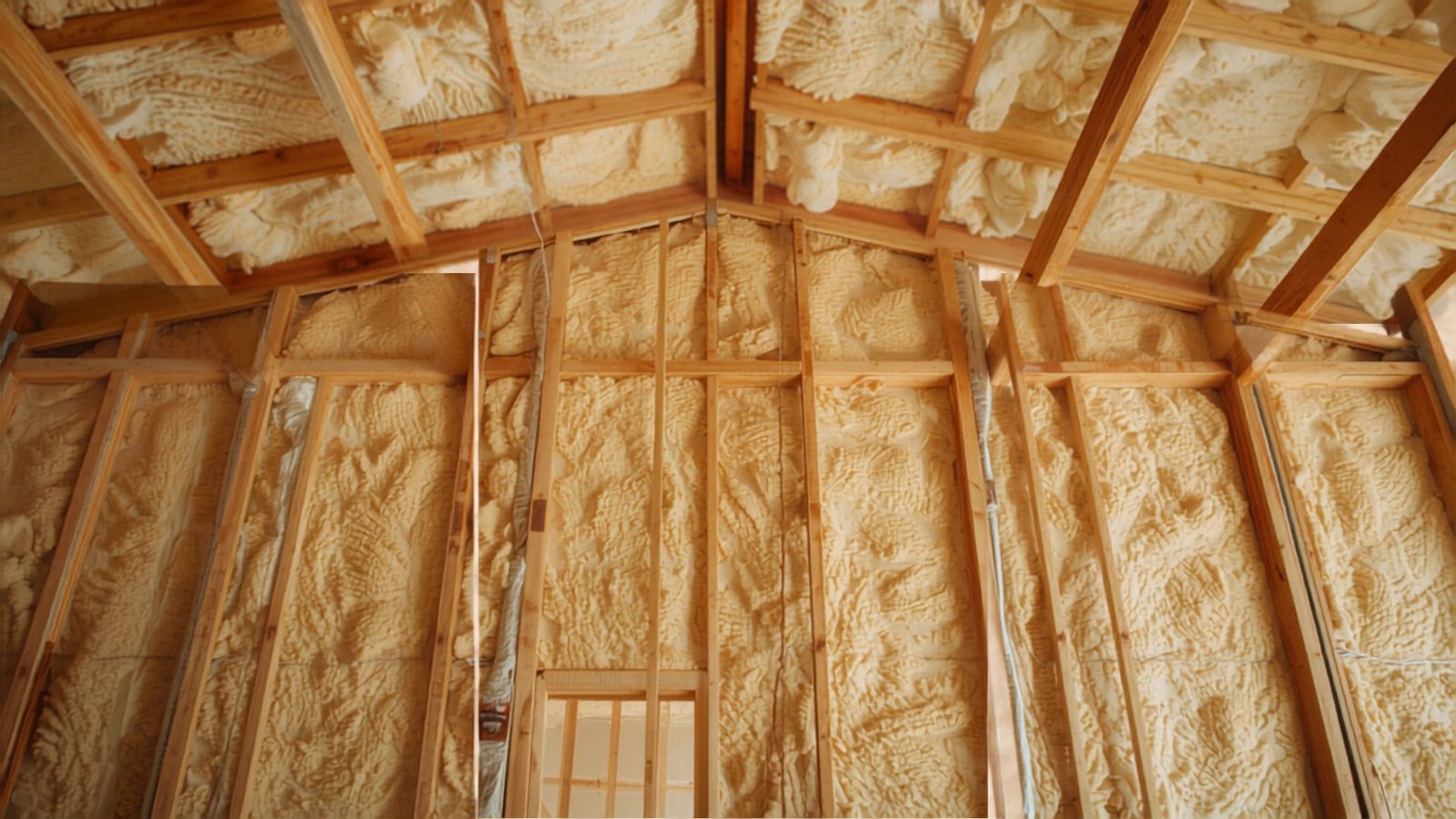
For Texas barndominium applications, closed-cell spray foam is the clear first choice of most experienced builders and building scientists. Here’s why it dominates:
- Air sealing and insulation in one step: ccSPF creates a seamless, gap-free insulation and air barrier simultaneously. In a metal building where air infiltration through panel laps and penetrations is a major heat gain pathway, this matters enormously.
- Vapor retarder: At 2+ inches thick, closed-cell foam functions as a Class II vapor retarder, controlling moisture diffusion through the building envelope and preventing condensation on metal surfaces.
- High R-value per inch: ccSPF delivers approximately R-6 to R-7 per inch — the highest of any commonly used insulation type. Two inches on walls gives R-13; 3–4 inches on the roof deck gives R-20 to R-26.
- Structural strengthening: When applied to the interior of metal panels, ccSPF actually increases the racking resistance and overall stiffness of the building — an added structural benefit.
Recommended minimum thicknesses for Central Texas: 2 inches on walls (R-13), 3–4 inches on roof deck (R-20–R-26). Many energy-conscious barndo owners go to 3 inches on walls (R-20) and 4–6 inches on the roof (R-26–R-40) for maximum summer cooling performance. Cost: $3.50–$5.50 per sq ft installed for 2″ wall coverage; more for thicker applications.
Option 2: Open-Cell Spray Foam
Open-cell spray foam (ocSPF) delivers a lower R-value per inch (approximately R-3.5) and, critically, is vapor-permeable — meaning it does NOT prevent moisture from moving through the building envelope. For this reason, open-cell foam is generally not recommended as the primary insulation system for metal barndominium walls and roofs in the Texas climate. It can be used in limited applications (interior partition walls for sound attenuation) but should not be relied upon for the exterior envelope without additional vapor control measures.
Option 3: Batt Insulation With Vapor Retarder
Fiberglass or mineral wool batt insulation installed between the metal framing with a continuous vapor retarder (heavy polyethylene sheeting or house wrap) is a lower-cost alternative to spray foam. Challenges in metal building applications: it’s difficult to achieve truly continuous vapor barrier coverage around all the framing members; any gaps or punctures in the vapor retarder can lead to condensation behind the batts; and the air-sealing performance of batts is significantly inferior to spray foam. If using batts in a Texas barndominium, opt for unfaced mineral wool batts with a separately installed vapor barrier, and be meticulous about air sealing all penetrations with foam and tape.
Option 4: Rigid Board Insulation
Rigid foam boards (polyisocyanurate, XPS, or EPS) can be used on the interior face of metal framing, with taped seams for air and vapor control. Polyiso delivers R-6+ per inch (though performance degrades slightly in cold conditions) and is commonly used under metal roofing for additional R-value. Rigid board insulation is often used in combination with spray foam: spray foam fills the complex geometries of the framing and provides air/vapor sealing, while rigid board adds R-value economically on flat surfaces.
The Roof: Where You Should Spend the Most
In Texas, the roof accounts for the majority of summer heat gain in a building. The sun beats down on a metal roof at 150–180°F surface temperatures during peak summer hours. Prioritize roof insulation above all else. Minimum 3″ ccSPF on the underside of roof panels; 4–6″ for superior performance. A light-colored or Galvalume metal roof further reduces solar gain. The combination of cool-color metal roofing and 4″+ ccSPF on the roof deck is the most cost-effective approach to reducing cooling bills in a Texas barndominium.
Common Mistakes to Avoid
- Skimping on roof insulation to save money (the most expensive long-term mistake)
- Using open-cell foam on metal exterior walls without additional vapor control
- Failing to insulate the slab perimeter (thermal bridging at the floor level)
- Not insulating interior metal columns and purlins that bridge from exterior to interior (these become condensation points)
- Choosing the cheapest spray foam contractor without verifying their product and application quality — foam thickness and density must be verified
Planning Your Hill Country Barndominium?
Cost and value figures in this article are general planning estimates and vary by site, materials, builder, and market conditions. Confirm current pricing and financing with your builder, lender, and a licensed professional before making decisions.
Hill Country Barndo Guide connects Texas Hill Country landowners with barndominium builders. Explore our recommended products, browse builders by Hill Country county, and download our free build checklist. Ready to move forward? Request quotes from Hill Country builders.
Leave a Reply